95 People Jailed Or Imprisoned For Politically-Motivated Crimes In February
Belarusfeed
3 March 2021, 01:23
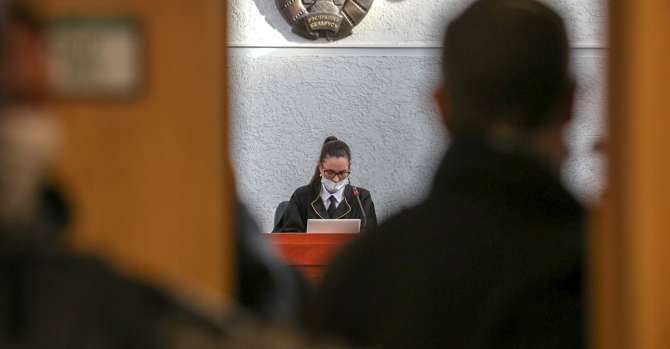 Belarusian human rights activists took stock of the trials against government opponents. In February 2021, at least 101 people were convicted, 48 were imprisoned (three of them are minors), 47 were restricted of liberty, three people were fined and sentenced to administrative arrest. Some of the accused stated that during the investigation they were tortured, however, the courts ignored these facts.
The largest number of sentences in cases related to the expression of a political position was passed in Minsk and the Minsk region. The most popular articles include:
Art. 342 of the Criminal Code (Organization and preparation of actions that grossly violate public order, or active participation in them) – at least 39 cases
Art. 369 of the Criminal Code (Public insult of a representative of the authorities in connection with the performance of his/her official duties) – 18 cases;
Art. 364 of the Criminal Code (Violence or the threat of violence against a member of the internal affairs bodies or his relatives) – 15 cases;
Art. 293 of the Criminal Code (Mass riots) – 12 cases;
Art. 339 of the Criminal Code (Hooliganism) – 10 cases.
In February, Brest resident Alexander Kordyukov received the most severe sentence. He was sentenced to 10 years in prison for resisting the police officers with the use of violence, the late Gennady Shutov in the same case was found guilty posthumously. Juvenile defendants Nikita Zolotarev was imprisoned for six years, Vitaly Prokhorov and Dmitry Strizhak – for two years each.
According to human rights activists, the legality and validity of the court decisions are questionable.
“In the scientific and practical commentary to the Criminal Code, which is a reference book for every investigator, it is stated that ‘riots in terms of article 293 should be accompanied by violence, pogroms, arson, destruction of property, armed resistance to the authorities. Other actions of protesters, manifested in violation of public order, entail administrative responsibility, and in the event of a gross violation of public order, they can be held accountable under articles 339 or 342’.
Examination of publicly available videos allows us to conclude that the protesters against the rigging of elections did not commit a crime that could be described as ‘mass riots’. Special forces of the Ministry of Internal Affairs used stun grenades and rubber bullets to disperse peaceful protests. Some cases of violence against police officers by demonstrators require an assessment of the legality of the actions of law enforcement agencies to end peaceful assemblies. Walking in the road during a rally, throwing a flower at the policemen, rolling out carts from a shopping centre, unsuccessful attempts to move metal fences cannot be assessed as actions that constitute the objective side of the ‘riots’.”
According to human rights activists, article 342 of the Criminal Code was used most often against opponents of the authorities.
“The collapse of the legal system, rigging of the presidential election, cruelty against the protesters and further impunity of the perpetrators, the refusal of the state to fulfil its international obligations in the field of human rights have caused a wave of rejection in the Belarusian society,” experts say. “Peaceful exercise of the right to assembly and expression of opinion (going out to the street, forming human chains, shouting slogans, clapping their hands) cannot be grounds for criminal prosecution.”
3 March 2021, 01:23
The largest number of sentences in cases related to the expression of a political position was passed in Minsk and the Minsk region. The most popular articles include:
Art. 342 of the Criminal Code (Organization and preparation of actions that grossly violate public order, or active participation in them) – at least 39 cases
Art. 369 of the Criminal Code (Public insult of a representative of the authorities in connection with the performance of his/her official duties) – 18 cases;
Art. 364 of the Criminal Code (Violence or the threat of violence against a member of the internal affairs bodies or his relatives) – 15 cases;
Art. 293 of the Criminal Code (Mass riots) – 12 cases;
Art. 339 of the Criminal Code (Hooliganism) – 10 cases.
In February, Brest resident Alexander Kordyukov received the most severe sentence. He was sentenced to 10 years in prison for resisting the police officers with the use of violence, the late Gennady Shutov in the same case was found guilty posthumously. Juvenile defendants Nikita Zolotarev was imprisoned for six years, Vitaly Prokhorov and Dmitry Strizhak – for two years each.
According to human rights activists, the legality and validity of the court decisions are questionable.
“In the scientific and practical commentary to the Criminal Code, which is a reference book for every investigator, it is stated that ‘riots in terms of article 293 should be accompanied by violence, pogroms, arson, destruction of property, armed resistance to the authorities. Other actions of protesters, manifested in violation of public order, entail administrative responsibility, and in the event of a gross violation of public order, they can be held accountable under articles 339 or 342’.
Examination of publicly available videos allows us to conclude that the protesters against the rigging of elections did not commit a crime that could be described as ‘mass riots’. Special forces of the Ministry of Internal Affairs used stun grenades and rubber bullets to disperse peaceful protests. Some cases of violence against police officers by demonstrators require an assessment of the legality of the actions of law enforcement agencies to end peaceful assemblies. Walking in the road during a rally, throwing a flower at the policemen, rolling out carts from a shopping centre, unsuccessful attempts to move metal fences cannot be assessed as actions that constitute the objective side of the ‘riots’.”
According to human rights activists, article 342 of the Criminal Code was used most often against opponents of the authorities.
“The collapse of the legal system, rigging of the presidential election, cruelty against the protesters and further impunity of the perpetrators, the refusal of the state to fulfil its international obligations in the field of human rights have caused a wave of rejection in the Belarusian society,” experts say. “Peaceful exercise of the right to assembly and expression of opinion (going out to the street, forming human chains, shouting slogans, clapping their hands) cannot be grounds for criminal prosecution.”

